

It’s never too late for: indoor climbing
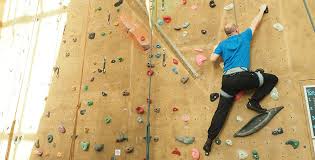
There comes a point, as we age, when exercise starts to feel either repetitive or punitive
The treadmill hums. The weights clang. Our motivation dips
And yet, most of us don’t want to slow down. We want to stay capable. Steady on our feet. Strong enough to lift suitcases, grandchildren, and shopping bags. Confident in our bodies
Indoor climbing offers something different
Not frantic. Not competitive. Just quietly adventurous
Why climbing works so well as we get older
Climbing is a full-body activity, but it doesn’t rely on explosive power. It rewards balance, thoughtfulness, patience and controlled movement – qualities many of us have developed over decades
You’re not racing anyone. You’re not chasing numbers. You’re solving a puzzle
Each route – especially in bouldering – is simply a problem to work out. Where should your foot go? Can you shift your weight instead of pulling harder? Is there a steadier way up?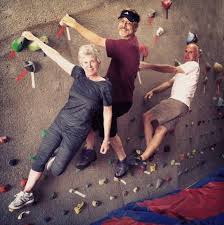
It becomes as much about thinking as strength
That blend of physical movement and mental focus is powerful. It keeps the brain engaged while gently building:
- Grip strength
- Core stability
- Shoulder mobility
- Balance
- Joint awareness
All of which matter enormously as we age
“I’m not strong enough” – a common concern
This is the biggest misconception
Climbing is not about hauling yourself up with your arms. In fact, beginners who try to do that tire quickly
Good climbing is about:
- Using your legs (your strongest muscles)
- Placing your feet carefully
- Keeping your body close to the wall
- Moving economically
In many ways, climbing rewards efficiency rather than force. And efficiency tends to improve with experience and patience!
Is it safe?
Indoor climbing centres in the UK and elsewhere are carefully supervised environments. There are three main formats:
Bouldering – Lower walls with thick crash mats underneath. No ropes
Top-rope climbing – Higher walls, secured with a rope from above
Auto-belay – Similar to top-rope but with an automatic safety device
For many over-55s, starting with bouldering on the easiest grades is a comfortable introduction. You stay low, step down when needed, and build confidence gradually
The key is to approach it sensibly:
- Warm up thoroughly (shoulders, wrists, hips)
- Start well below your perceived limit
- Stop before fatigue sets in
- Rest between attempts
There is no prize for pushing through tired fingers
What the first session feels like
Expect to feel slightly awkward at first. That’s normal
Your forearms may feel unfamiliar strain. Your fingers may notice holds they’ve never met before. You might pause halfway and think, “How on earth do I move from here?”
Then you work it out
And when you reach the top of even a modest route, there’s a quiet satisfaction that’s hard to replicate on a cross-trainer
It isn’t triumph. It’s capability.
Unexpected benefits
Grip Strength
Grip strength is increasingly recognised as a predictor of overall health and longevity. Climbing improves it naturally – without repetitive squeezing exercises
Balance and proprioception
Every move requires you to feel where your body is in space. That awareness translates directly into steadier walking and greater confidence on uneven ground
Posture
Climbing encourages shoulder stability and core engagement. Many people notice they stand a little taller after a few months
Confidence
There’s something quietly powerful about doing something that once seemed “not for people like me”
Getting started
The simplest starting point is the indoor wall finder on UKClimbing
It has a searchable directory covering:
-
Dedicated climbing centres
-
Bouldering gyms
-
Leisure centres with climbing walls
-
University facilities
You can search by town or postcode and filter by wall type. It’s comprehensive and regularly updated — ideal if you want something dependable
If you’re considering trying it:
- Book an induction or beginner session
- Go at a quieter time of day (late mornings are often ideal)
- Climb for 45 minutes initially
- Rest generously between climbs
- Allow 2–3 days of recovery before your next visit
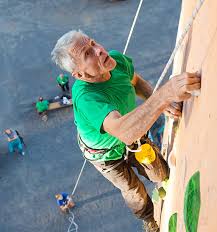 Your connective tissues – tendons especially – adapt more slowly than muscles as we age. Progress gradually, and you’ll build strength safely
Think months, not weeks
The social element (without pressure)
Climbing gyms are surprisingly friendly places. People often share tips and encouragement across age groups
That said, there’s no obligation to be sociable. You can climb quietly at your own pace, focusing on your own routes
It can be communal – but it doesn’t have to be performative
Adventure, reframed
Adventure doesn’t always mean risk
Sometimes it simply means doing something slightly outside your routine
Standing beneath a climbing wall at 58 or 63 or 71 and thinking, “Why not?” – that’s adventure enough
You don’t need to climb high. You don’t need to climb hard. You simply need to move upward, thoughtfully.
And in a world that encourages us to sit more and narrow our horizons, choosing to go vertical – even a few feet at a time – feels quietly defiant
Not reckless. Just alive
If you’ve been looking for a form of movement that strengthens the body, steadies the mind, and offers just a hint of exploration, indoor climbing might be worth a visit
Take it calmly. Take it steadily. And see how it feels to reach just a little higher than you expected




Leave a reply
You must be logged in to post a comment.