

‘Must see’ movie: Tuner
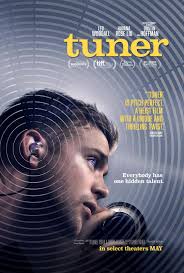
Just when it seemed that the modern crime thriller had exhausted every possible variation on heists, gangsters and reluctant anti-heroes, Tuner arrives with a genuinely fresh premise and a surprising amount of heart
Directed by Daniel Roher, best known for his Oscar-winning documentary Navalny, Tuner marks an impressive transition into narrative filmmaking. While it contains all the ingredients of a traditional crime caper – safe-cracking, gangsters, stolen valuables and escalating danger – its real strength lies elsewhere. This is a film driven by character, sound and emotion rather than by gunfights and car chases
At its centre is Niki, played by Leo Woodall in what may well prove to be a career-defining role. Niki is a former musical prodigy who now works as an apprentice piano tuner in New York. His life is shaped by hyperacusis, a rare hearing condition that makes ordinary sounds painfully intense. Ambulance sirens, alarms and raised voices can leave him disoriented or physically incapacitated. Yet the same extraordinary hearing that complicates his daily life also gives him a remarkable gift: the ability to crack safes simply by listening to their mechanisms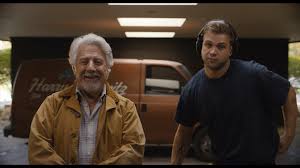
It is a wonderfully original premise, but what makes it work is the way the film grounds the concept in a believable and sympathetic character. Niki is neither a conventional action hero nor a stereotypical criminal mastermind. He is intelligent, sensitive, socially awkward and deeply loyal. Woodall captures all these contradictions with considerable charm, creating a protagonist who is easy to root for even as he drifts into increasingly dubious territory
The story begins when Niki accidentally becomes involved in a robbery while servicing a piano in a wealthy client’s home. After demonstrating his uncanny safe-cracking ability, he is drawn into a lucrative world of high-end theft. Yet the film never allows the criminal plot to overwhelm its human story
Central to that story is Niki’s relationship with Harry, his ageing employer and surrogate father figure, played magnificently by Dustin Hoffman. Harry and his wife Marla have become Niki’s adopted family, and it is their financial difficulties – particularly mounting medical bills – that help push him towards crime. Hoffman brings warmth, humour and vulnerability to the role, creating a partnership with Woodall that provides much of the film’s emotional foundation
The relationship between the two men is one of Tuner’s greatest achievements. Rather than serving merely as narrative motivation, Harry and Niki feel like fully realised characters whose bond has developed over many years. Their scenes together provide some of the film’s most touching moments and help elevate it above the standard thriller formula
Equally important is the film’s romantic subplot involving Ruthie, an aspiring concert pianist played by Havana Rose Liu. In many crime dramas, the love interest exists largely as a plot device, but Tuner invests genuine time and care in the growing relationship between Niki and Ruthie. Their connection develops naturally through a shared understanding of music and sound, giving the romance an authenticity often missing from the genre
If the performances provide the film’s emotional richness, its sound design supplies its technical brilliance. Several critics have highlighted this aspect as the movie’s standout achievement, and with good reason. Roher places audiences directly inside Niki’s auditory world. Every piano note, safe dial click, and distant alarm becomes significant. Sounds are not simply heard but almost felt
The result is a film that creates tension in unusual ways. Traditional thrillers rely on weapons and violence to generate suspense; Tuner often uses noise instead. An alarm system or smoke detector can become as threatening as a gun. The audience experiences Niki’s sensitivity firsthand, making even mundane sounds feel dangerous and unpredictable
 Roher’s documentary background is evident in the precision with which he constructs both scenes and characters. The storytelling is carefully calibrated, balancing crime, romance and family drama with considerable skill. For much of its running time, the film maintains an impressive equilibrium between these different elements
Its main weakness is that the crime narrative occasionally struggles to match the quality of the character work surrounding it. As the story moves towards its climax, some plot developments become increasingly convenient and the heist elements less convincing. The final act requires a few leaps of faith that may test some viewers’ credibility. Nevertheless, the emotional investment built up earlier ensures that the ending remains satisfying despite these shortcomings
Ultimately, Tuner succeeds because it understands that audiences care more about people than plot mechanics. The heists may provide the excitement, but it is the relationships, performances and inventive use of sound that linger in the memory
With a breakout performance from Leo Woodall, sterling support from Dustin Hoffman and a distinctive directorial voice from Daniel Roher, Tuner is an unexpectedly romantic, refreshingly original thriller that proves there are still new notes to be played in the crime genre




Leave a reply
You must be logged in to post a comment.