

What are…Exchange Traded Funds?
Exchange-Traded Funds – or ETFs – sound complicated
In reality, they’re one of the simplest investment ideas ever created
An ETF is basically a basket of investments that trades like a share
Instead of buying dozens or hundreds of individual companies, you can buy one ETF and instantly own a slice of a whole market
That simplicity is why ETFs have quietly become one of the most important innovations in modern investing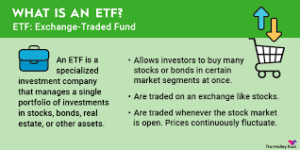
What exactly is an ETF?
An ETF is a fund that holds a collection of assets – typically shares, bonds or commodities – and is traded on a stock exchange just like a normal share
For example, an ETF might track:
- The S&P 500
- The FTSE 100
- Global stock markets through the MSCI World Index
When you buy an ETF tracking one of these indexes, you effectively own a tiny slice of every company in that index
One purchase. Instant diversification
How ETFs differ from traditional funds
Traditional mutual funds have been around for decades. ETFs borrow many of the same ideas but add a crucial twist
They trade throughout the day
With a traditional fund:
- You buy or sell at the end-of-day price
With an ETF:
- You can buy and sell at market prices throughout the trading day
That means ETFs combine the diversification of a fund with the flexibility of a share
It’s a powerful combination
Why investors love ETFs
 ETFs have exploded in popularity for several reasons.
- Diversification
Buying individual stocks exposes you to the fortunes of a single company
Buying an ETF spreads your money across dozens or hundreds of companies
A global equity ETF might hold over 1,500 companies worldwide
One investment, broad exposure
- Low costs
Many ETFs simply track an index rather than trying to beat it
That means they require less research, less trading and fewer managers
Lower costs follow naturally
Annual fees for many ETFs are a fraction of those charged by traditional actively managed funds
Over the decades, those cost differences can compound into significant sums
- Transparency
Most ETFs disclose their holdings daily
Investors know exactly what they own
This is quite different from some traditional funds, which may only reveal holdings periodically
- Flexibility
Because ETFs trade like shares, investors can:
- Buy and sell during the trading day
- Place limit orders
- Use them in tax-efficient wrappers such as ISAs or pensions
They fit neatly into modern online investment platforms
ETFs aren’t just for shares
Although many ETFs track stock markets, the structure works for many other assets
You can now buy ETFs tracking:
- Government bonds
- Corporate bonds
- Gold and commodities
- Emerging markets
- Specific sectors like technology or healthcare
Some ETFs even track themes such as clean energy or artificial intelligence
This flexibility allows investors to build highly diversified portfolios with just a handful of instruments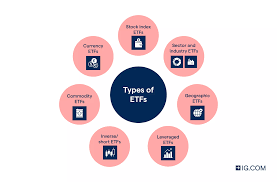
Are ETFs always passive?
Most ETFs are passive, meaning they simply track an index
But not all
Some ETFs are actively managed, with fund managers selecting investments to outperform the market
These remain a smaller part of the ETF universe but are growing rapidly
Still, the core appeal of ETFs remains their simplicity: low-cost exposure to broad markets
The risks
Despite their simplicity, ETFs are still investments and carry risks
Market risk
If the underlying market falls, the ETF will fall too
A global equity ETF rises and falls with global stock markets
Sector concentration
Some ETFs focus on narrow sectors or themes. These can be far more volatile than broad market funds
Liquidity
Most major ETFs are highly liquid, but smaller or specialist ETFs may be harder to trade in large amounts
Understanding what the ETF actually holds is always important
Why ETFs matter
ETFs have changed the investment landscape
They made diversification easier
They made investing cheaper
And they opened financial markets to millions of individual investors
Today, trillions of dollars are invested in ETFs worldwide
They are used by:
- Individual investors
- Pension funds
- Hedge funds
- Central banks
From beginners to professionals, ETFs have become a core tool in modern portfolios
The bottom line
ETFs succeed because they combine three powerful ideas:
simplicity, diversification and low cost
Instead of trying to pick the next winning stock, investors can buy a slice of an entire market
One trade. Hundreds of companies. And a strategy designed to work quietly over the long term
In investing, simplicity often wins
ETFs prove it


Leave a reply
You must be logged in to post a comment.