

Business Property Relief: the inheritance tax strategy that flies under the radar
Inheritance tax in the UK is simple in theory
40% on estates above the available allowances
But in practice?
It’s one of the most planned-for taxes in the system
And Business Property Relief (BPR) sits right at the centre of modern IHT strategy
Originally designed to stop family businesses from being broken up on death, BPR has evolved into something more – a legitimate, structured way for investors to mitigate inheritance tax while retaining control of their capital
NMTBP explains more
What BPR does
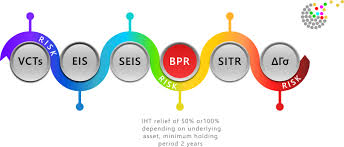
If you hold qualifying business assets for at least two years, and still hold them at death, those assets may qualify for:
- 100% relief from inheritance tax, or
- 50% relief in some cases, from April 2026
That means a potential reduction of a 40% tax charge to zero on those assets
Not deferral. Not a reduction over time. Full relief
But only if strict conditions are met
The core requirement: trading businesses
BPR applies to trading businesses.
It does not generally apply to businesses mainly engaged in:
- Property investment
- Holding investments
- Dealing in securities
This is critical
 A company collecting rent from residential properties? Usually no relief
A company actively running a hotel, care home, manufacturing operation, or technology business? Potentially yes
HMRC looks at the underlying activity. Substance matters
The two-year clock
Unlike lifetime gifting – which typically requires surviving seven years – BPR only requires a two-year holding period
That shorter timeframe is one reason it’s become so popular in later-life planning
But remember: The asset must still qualify at the date of death. If circumstances change, relief can be lost
How BPR is used today
Originally, BPR was mainly relevant to people who already owned private businesses
Now, specialist investment managers have built portfolios specifically designed to qualify
Broadly, there are two main routes:
⃣ AIM-Based BPR Portfolios
Many strategies focus on companies listed on the Alternative Investment Market (AIM), part of the London Stock Exchange
AIM shares can qualify for BPR – provided the company is genuinely trading and not primarily investment-based
This has led to the growth of specialist discretionary portfolios such as:
- Octopus Investments Business Relief Service
- Downing LLP inheritance tax services
- Foresight Group Business Relief solutions
These services typically:
- Invest in a basket of AIM-listed trading companies
- Aim to maintain BPR qualification
- Require a minimum two-year holding period
- Allow investors to retain access to capital (subject to liquidity)
They aren’t passive index funds. They’re actively managed portfolios targeting BPR eligibility
Important development
From April 2026, BPR on AIM shares is scheduled to reduce from 100% to 50% relief on assets over £2.5 million. These assets will now be taxed at 20% IHT. That significantly alters planning calculations and makes manager selection and structuring even more important
⃣ Unquoted company portfolios
The second approach involves investing in unquoted trading companies – the traditional heartland of BPR
Some managers structure portfolios that invest directly into private businesses expected to qualify for 100% relief
These tend to:
- Be less liquid
- Carry a higher business risk
- Offer closer alignment to the original spirit of BPR
But they may retain full 100% relief (subject to legislation and qualification). This route often appeals to investors comfortable with private-market exposure
Why BPR is favoured by many
Three words: control and flexibility.
Compared with gifting:
- You retain ownership
- You retain income
- You can usually sell (subject to liquidity)
- There’s no need to survive seven years
Compared with trusts:
- Structures are simpler
- Administration is lighter
- Capital is not irrevocably given away
For older clients who want to reduce IHT but are unwilling to surrender access to wealth, this flexibility is powerful
But be VERY clear about the risks
BPR investing is not low risk.
These portfolios typically invest in:
- Smaller companies
- AIM-listed shares
- Unquoted private businesses
That means:
- Higher volatility
- Potential capital loss
- Liquidity constraints
- Legislative risk
You are exchanging tax certainty for investment risk
Avoiding 40% inheritance tax is attractive
But a falling portfolio value can undermine the benefit
What doesn’t qualify
Standard index funds, ETFs, and mainstream unit trusts do not qualify
Owning an FTSE 100 tracker does not give you BPR
Why? Because large listed companies on the main market do not meet the unquoted/AIM criteria, and many funds include non-qualifying investment businesses
This is specialist territory
The political question
BPR is not a loophole. It was intentionally created to protect trading businesses
But as more wealth flows into AIM portfolios for tax reasons, scrutiny increases
Recent changes to AIM relief show that governments can and will adjust the rules
Any BPR strategy must factor in legislative risk over the long term
The bottom line
Business Property Relief remains one of the most powerful inheritance tax planning tools available in the UK
It can reduce a 40% IHT charge to zero (or 50%) on qualifying assets after just two years
But it requires:
- Genuine trading exposure
- Careful portfolio construction
- Ongoing monitoring
- Professional advice
It’s NOT a free lunch.
It IS a trade:
Market risk and legislative risk in exchange for inheritance tax mitigation
For the right investor, at the right stage of life, that trade can make sense
But it should always be made with eyes wide open





Leave a reply
You must be logged in to post a comment.